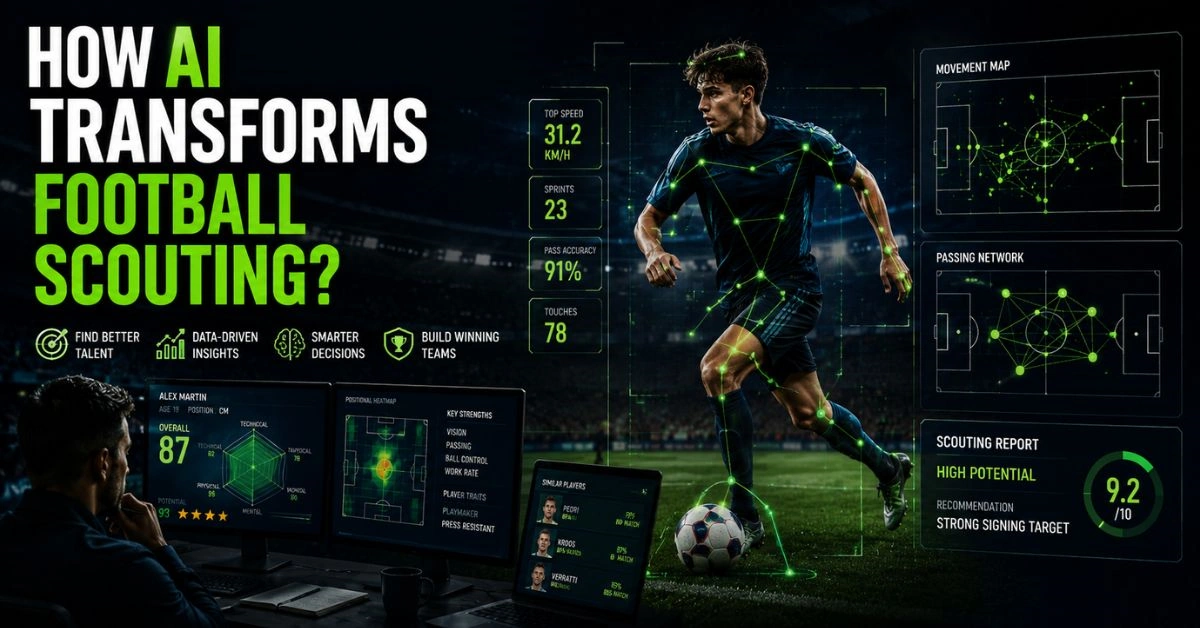
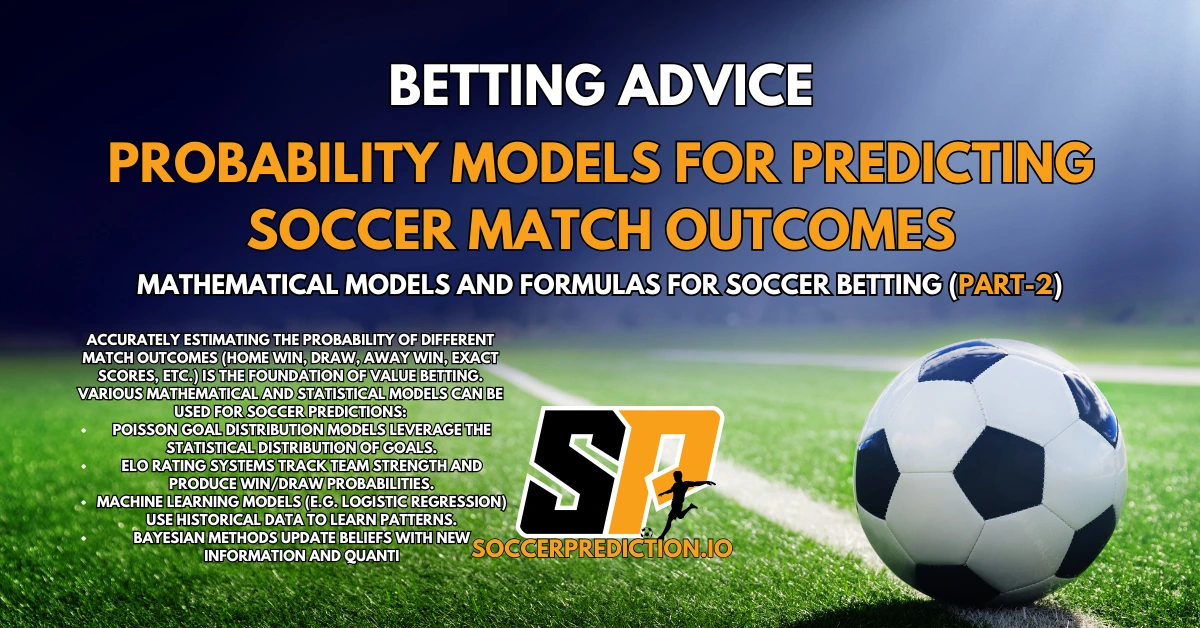
Football keeps seducing people with the idea that one more statistic will finally explain everything. xG, tracking data, betting odds, injury models, and AI forecasts all help.
But the central question remains awkward: can football ever become fully predictable, or is the sport designed to keep embarrassing certainty?
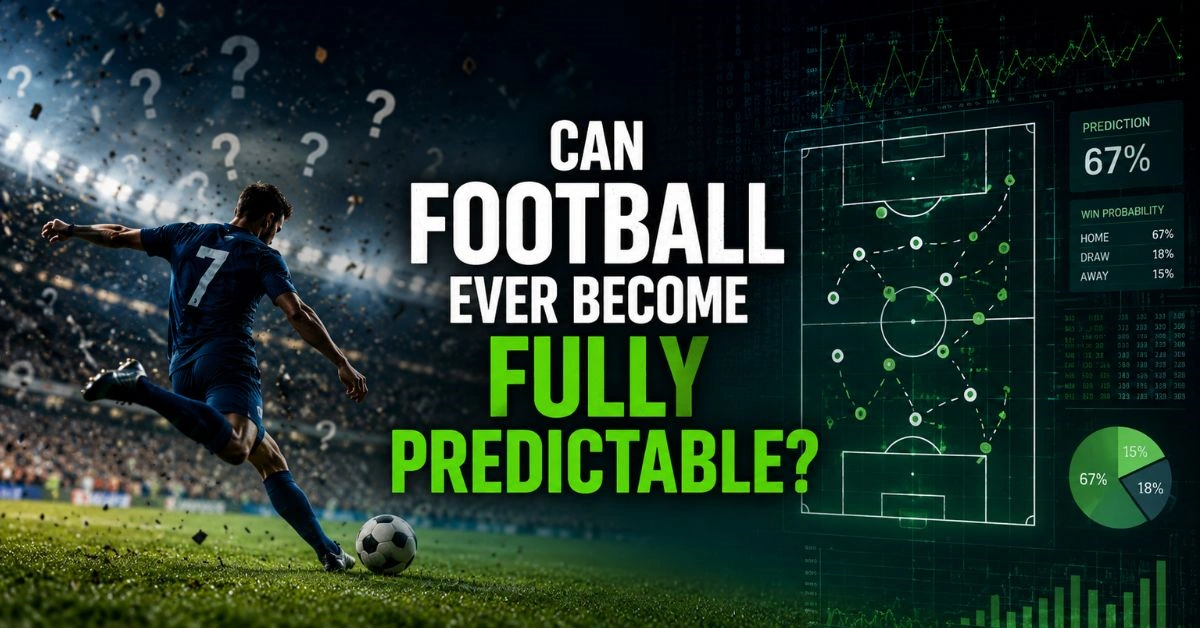
The Sport Looks Logical Until One Ball Hits One Shin
The first problem is simple: football is a low-scoring sport. In basketball, quality usually has hundreds of possessions to prove itself. In football, a weaker team can survive for 80 minutes, win one corner, cause panic, and suddenly the favorite’s “dominant performance” becomes a funeral with passing maps.
That is why models can be intelligent without being prophetic.
Opta’s xG model, for example, analyzes shot context such as location, pressure, assist type, and goalkeeper position, but even strong xG models still estimate probability rather than destiny.
Predictive Input | What It Explains Well | What It Still Misses |
xG | Shot quality over time | One ridiculous finish into the top corner |
Possession | Territorial control | Sterile passing with no danger |
Pressing intensity | Tactical aggression | Mental fatigue after 70 minutes |
Injury data | Player availability | Fear of re-injury during sprints |
Betting odds | Market expectation | Late emotional swings from bettors |
Team form | Recent rhythm | Sudden tactical change by a coach |
Head-to-head record | Historical pattern | New players, new manager, new context |
Weather | Physical conditions | Individual adaptation and luck |
Lineups | Starting quality | Red cards, substitutions, panic |
Leicester City’s 2015-16 Premier League title remains the sport’s most useful anti-arrogance lecture.
They began as a 5,000-1 outsider, yet Claudio Ranieri’s side won the league with N’Golo Kanté, Riyad Mahrez, Jamie Vardy, disciplined defending, brutal transitions, and an almost comic refusal to obey preseason probability.
- The market knew Leicester were unlikely – it did not know they were impossible.
- Ranieri simplified the system – clarity beat fashionable tactical complexity.
- Kanté changed midfield physics – one player made the pitch feel smaller.
- Vardy turned transitions into punishment – opponents could not safely overcommit.
- Mahrez created value from low-volume moments – efficiency beat constant control.
- The big clubs underperformed together – prediction models hate simultaneous collapse.
- Confidence compounded weekly – psychology became a performance multiplier.
- The odds became a story – and stories affect how players and fans behave.
- The title was not random – but it was far outside normal expectation.
This is the uncomfortable middle ground: Leicester were not a lottery ticket wearing blue shirts. They were a real tactical team that became visible too late for prediction systems to price properly. Football is not pure chaos; it is structured chaos with boots on.
Betting Markets Are Smart, But Not Gods With Spreadsheets
Modern betting markets are often more accurate than casual fans because they absorb information quickly. Odds reflect team strength, injuries, public money, historical data, and professional trading activity.
Academic work has repeatedly found that bookmaker odds can function as useful forecasts, although market efficiency varies across leagues, bet types, and time periods.
RajBet casino is a good example of how ordinary bettors now experience this prediction machine. Its sports section presents events, markets, betslips, single bets, combo bets, and live wagering mechanics, so the user is not just watching football – they are constantly reinterpreting it through prices.
RajBet User Action | What The Bettor Thinks | What Is Actually Happening |
Opens football markets | “I’ll check who is favored.” | Market probability is already compressed into odds |
Adds a single bet | “This feels clean.” | One event still carries variance |
Builds a combo | “More picks, bigger payout.” | Correlation and error risk multiply |
Watches live odds move | “The game is changing.” | Traders and algorithms reprice new information |
Bets after a goal | “Momentum is obvious now.” | Price may already include emotional overreaction |
Follows popular picks | “Everyone sees the same value.” | Public bias may distort perception |
Chases late drama | “One more corner can save it.” | Time decay is usually ruthless |
Compares prematch and live | “Now I know more.” | The market also knows more, instantly |
This is why “football becoming predictable” is not only a data question. It is also a market question.
The moment a useful pattern becomes public, odds adjust. A bettor who spots undervalued high-pressing teams today may find that same edge diluted next month, because markets are nosy creatures with excellent hearing.
The psychology matters as much as the math. Normal fans do not read odds neutrally. They read them with hope, memory, ego, superstition, and sometimes the dangerous confidence of a man who watched three highlight reels and now thinks he is Carlo Ancelotti with Wi-Fi.
- Availability bias – a recent 4-0 win feels more important than six dull months.
- Confirmation bias – fans search for stats that support the pick they already like.
- Favorite bias – famous clubs feel safer, even at poor prices.
- Longshot temptation – huge odds make tiny probability feel emotionally large.
- Recency illusion – last weekend becomes “form,” even when it was noise.
- Narrative betting – revenge games, derby emotion, and farewell matches get inflated.
- Tilt after losses – one bad result creates rushed live bets.
- False pattern memory – “they always score late” becomes a private religion.
- Social proof – popular tips feel safer because many people repeat them.
The best markets reduce stupidity, but they cannot remove humanity. That is why smart bettors should treat odds as information, not instruction. A price can be sharp and still lose. That sentence sounds boring until it saves a bankroll.
AI Will Improve Prediction
AI will absolutely make football prediction better. Computer vision can track off-ball movement. Wearables can estimate workload.
Natural-language systems can process injury news, press conferences, travel disruptions, and social-media signals faster than any human analyst. Opta’s prediction models already combine market odds, team rankings, and historical performance to estimate league outcomes.
But better prediction does not mean full prediction. Saudi Arabia’s 2-1 win over Argentina at the 2022 World Cup is the cleanest modern example.
Argentina entered as a heavy favorite, with some pre-match odds listing them around -675, while Saudi Arabia were priced as a massive underdog; then Saudi Arabia pressed aggressively, scored twice, and broke the script in front of the entire planet.
AI Can Measure | Why It Helps | Why It Still Breaks |
Sprint load | Detects fatigue risk | Adrenaline can hide fatigue |
Defensive shape | Shows tactical structure | One missed step destroys structure |
Shot probability | Values chance quality | Finishing has emotional variance |
Passing networks | Maps team relationships | A red card rewrites everything |
Press resistance | Predicts buildup quality | Crowd pressure changes decisions |
Player form | Tracks performance trend | Confidence can flip fast |
Weather impact | Adjusts physical assumptions | Some players adapt better |
News sentiment | Reads public information | Private dressing-room mood stays hidden |
Market movement | Shows collective expectation | Collective expectation can be wrong |
Saudi Arabia did not defeat Argentina because all data was useless. They won because a match is a living system.
Herve Renard’s team compressed space, caught Argentina offside repeatedly, survived pressure, and turned two second-half moments into history. The model could understand the risk. It could not emotionally stand inside Lusail Stadium and feel the game beginning to tilt.
The future of prediction will probably look less like a magic answer and more like a dashboard of probabilities. For gamblers and sports fans, that is useful – but only if they understand what the numbers are actually saying.
- Prediction will become faster – live prices will react within seconds.
- Models will become more personalized – bettors may see tailored insights by league or market.
- Micro-events will matter more – substitutions, fatigue, and pressing shifts will affect live odds.
- Public narratives will be priced quicker – hype will lose value faster.
- Small leagues may stay softer – less data often means less market precision.
- Draws will remain awkward – football’s least glamorous result is statistically annoying.
- Human psychology will still leak through – players are not clean data points.
- Value will move earlier – late bettors may find fewer obvious mistakes.
- Discipline will beat drama – the dull bettor may age better than the genius gambler.
Fully predictable football would require perfect knowledge of tactics, fitness, weather, referee behavior, player emotion, crowd pressure, market reaction, and luck.
At that point, we would not be watching football. We would be watching accounting in boots. Nobody wants that, except maybe one extremely intense spreadsheet.
Conclusion
Football will become more measurable, more automated, and more intelligently priced. It will not become fully predictable. The sport has too few goals, too many emotional variables, and too much human improvisation.
The smarter future is not about finding certainty. It is about reading probability better, betting more calmly, and remembering that the ball still enjoys ruining expensive theories.