Estimated Numbers on Bets Placed on the 2026 FIFA World Cup
The 2026 World Cup is over. Forty-eight teams, three host nations, two months of football and, running alongside all of it, a betting market that dwarfed anything the sport had seen before.
The numbers landing now, a week on from the final whistle in New Jersey, are exactly what you would expect if you had been paying attention to how quickly the industry expanded across North America over the last few years.
Legal sports betting was available across more US states in 2026 than at any point in history, and the difference showed. Opening an account with any of these bookmakers took minutes, and for millions of people tuning in from cities that had never had access to regulated wagering before, this was their first real World Cup betting cycle.
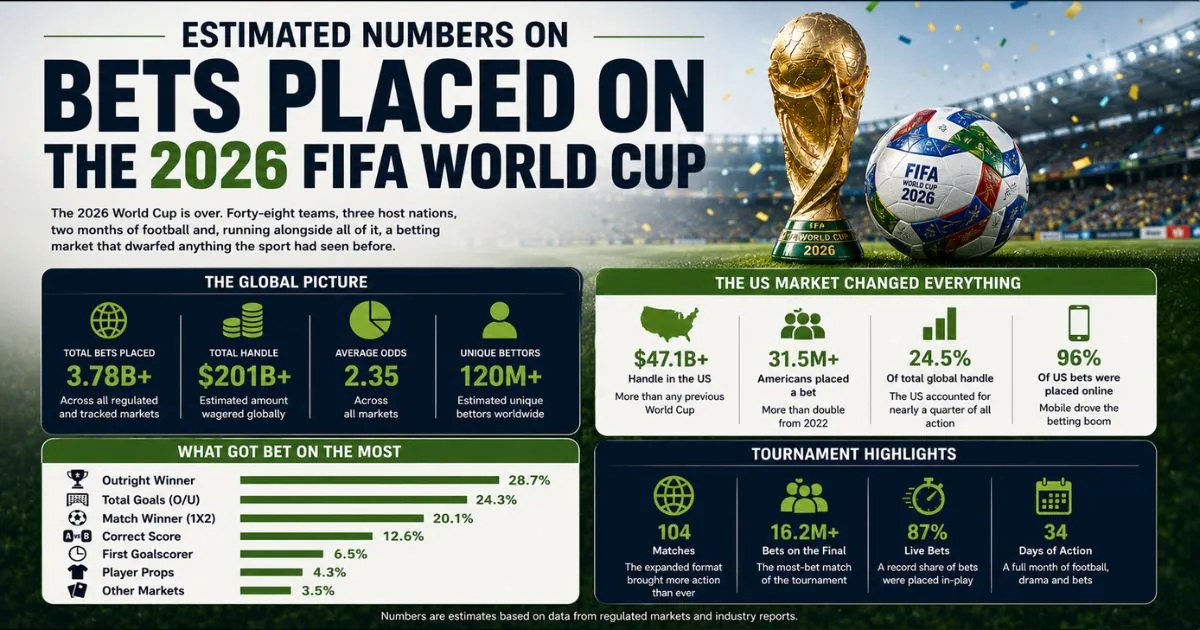
The headline figure, pulled from a mix of operator disclosures and industry body projections, puts total global bets on the tournament somewhere in the region of $50 billion. Not a confirmed number. No single authority tracks every market in every country.
But the data coming out of the American Gaming Association, combined with European operator reports and estimates from the Asian markets, point somewhere in that range. Most analysts think that figure is conservative.
The US Market Changed Everything
The American numbers are the ones that shifted the whole conversation. Heading into the tournament, the AGA projected US bettors would place somewhere around $3.1 billion across the six weeks of football.
By the time the quarter-finals arrived, several major operators were reporting handle figures ahead of those projections, driven by the host nation effect and by the sheer volume of casual bettors the tournament pulled in from outside the usual sports betting audience.
The Super Bowl remains the biggest single-day betting event in American history. The 2026 World Cup did not challenge that on any one night, but across 104 matches played over six weeks, estimates put the total US handle somewhere between $3.5 billion and $4.5 billion by the time the final was done. A number that would have seemed impossible for a football tournament in the United States not that long ago.
The Global Picture
Outside the US the numbers are harder to confirm, as associations are still gathering data from the last matches of the tournament, but no less significant even if delayed. The UK and Ireland are the most mature, regulated betting markets in the world for football, and the World Cup is always the biggest event of the calendar.
Estimates from major UK operators suggest a combined handle somewhere north of £4 billion across the tournament, with the final and the knockout rounds doing the heavy lifting, especially considering England was one of the four teams to play the semifinals.
The Asian markets, many of which operate outside regulated frameworks in territories where licensed betting is restricted, are estimated to have accounted for a huge portion of the global total on their own. Some analysts put that figure at upwards of $20 billion, though the lack of transparency makes it more of an informed estimate than hard data.
What Got Bet on the Most
Outright winner markets attracted the biggest early volume, as they always do at a World Cup. Match result was the most popular single bet type across regulated markets. First goalscorer and both teams to score followed closely behind, which will surprise nobody who has ever placed a bet on a major tournament.
The final generated the highest single-match handle of the whole competition. The exits of the host nations, particularly the United States, produced spikes in live betting activity on the nights they happened, which tells you something about how quickly a new betting audience had attached itself to the tournament by the knockout stage.
The full picture will come out over the next few months as operators publish quarterly earnings and industry bodies release proper breakdowns. But the rough shape of it is already clear. The 2026 World Cup was the biggest betting event in the history of football. Probably in the history of sport. The numbers will confirm what most people in the industry had already worked out well before the final whistle.