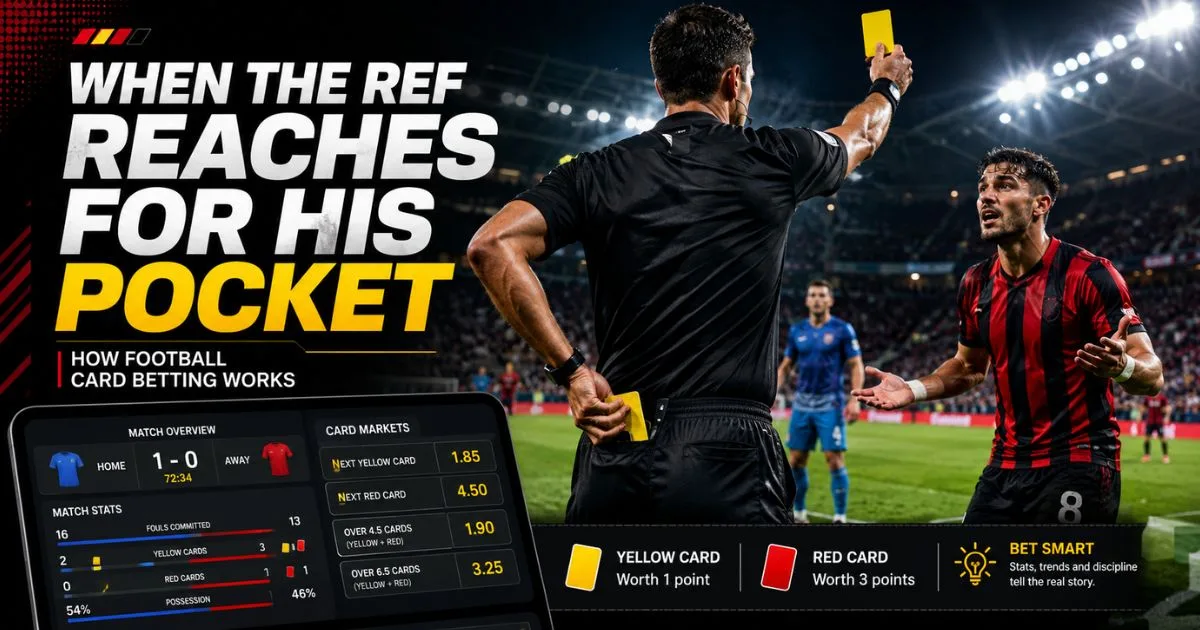
Goals, referees' appointments and corners have been staple betting markets for years. But there's one market where the referee suddenly becomes a key stat. At first glance, the match might appear calm. But then a rash late challenge or fierce spat takes place. The referee reaches for his pocket, and it can turn a football game into a card betting contest.

How Does Football Card Betting Work?
Instead of backing teams to win, bettors wager on which team will receive more cards, or even whether a particular player will see yellow. The top bookmakers turn football's disciplinary contests into betting markets. This is especially true for the emerging African betting market, Bettingtop10 Zimbabwe, which continues to expand its football coverage of domestic leagues and the top European leagues.
What Exactly Is Card Betting?
Card betting involves wagering on the number, type, or distribution of cards shown during a match. The most basic form of card betting allows bettors to wager on whether more or fewer than a listed number of cards will be shown in a match.
For example, if a bookmaker lists a market at 4.5 cards, betting Over 4.5 means you need at least five cards shown for your bet to win. Fewer than five cards shown and bets on the Under 4.5 win.
Rules can vary from bookmaker to bookmaker regarding whether yellow cards and red cards count as cards. Understanding how the bookmaker settling the market defines a "card" is important. The Laws of the Game give clear meanings to card definitions.
- A yellow card = caution
- A red card = sending-off
Referees Become Predictable Statistics
As you might expect, analysts won't often include referees in their team previews. Certain referees are known to tolerate more physical play than others. And each referee differs in how they discipline players for persistent fouling or dissent.
Knowing how many cards a referee has averaged in previous matches won't give you a guaranteed result for their next game. But it can offer valuable insight.
Examining previous matches can help you make informed decisions when considering card betting markets. Analysing a card market opportunity should also include examining each team's disciplinary history, playing style, and the match's perceived importance.
Player Cards Become Marketable Assets
Players receiving cards is another popular form of card betting. A bookmaker may list odds on whether a player will see yellow or not. Expect defenders and midfielders likely to be involved in challenges to dominate player card betting markets.
A card-heavy defensive midfielder trying to stop an opponent's counterattacks may encounter different risks compared to a winger who spends 90 minutes pushing forward.
Successful player card betting requires more than knowing whether a player plays a "physical" style of football. Player positioning, role within the team, expected playing time, and even tactical instructions can influence whether a player wins your wager.
Card Betting & Red Cards: A Volatile Combination
No player or team wants to receive a red card. That one act can change any given match. You don't simply add another card to your bet. The official rules state that showing a player a red card means sending off, and they cannot continue playing.
When betting on cards, how bookmakers treat red cards varies by market. Some bookmakers will count a red card as a card according to their rules. Others may use card-point systems to settle card bets.
As always, checking how the bookmaker defines its market is more important than what you may assume the ruling should be.
It's Fair to Say Betting on Cards Is Like Betting on the Game Within a Game
Cards tend to become a central focus when match situations encourage teams or players to change their discipline. The match is tied with 15 minutes remaining. A midfielder who picked up a caution may think twice before challenging for a ball.
The team behind may try to "win" the game by any means necessary. The team ahead may waste time and inflame the opposition. Players might accept yellow cards they usually avoid because the result matters more than their playing time.
Local derbies tend to heat up as the game progresses. Factors like this are why sharp card bettors watching a live game will pay more attention to match dynamics than the card count alone.
Matches With High Emotional Exertions = Potential Card Markets
Derbies tend to add an extra dimension to games between mid-level teams. Players have more than likely grown up knowing or facing their counterparts on the opposing team. Fans tend to create a louder atmosphere, which can make challenges feel bigger than they are.
Players may let their emotions get the better of them, leading to unnecessary bookings. Higher emotions don't guarantee more cards. But they can create a playing environment worth studying when exploring card markets.
Matches with everything to play for, such as relegation six-pointers, league-title clashes, or knockout contests, are the same. Simply put, higher stakes mean higher emotions, which can lead to a greater chance of more cards coming out.
Understanding a Bookmaker's Card Betting Rules Is Key
Before looking at any team or player stats, familiarise yourself with how the bookmaker settles the market you intend to wager on.
- What qualifies as a card?
- How are second yellow cards treated?
- How does the bookmaker treat straight red cards?
- Does the market utilise cards or card points?
- Do player card markets get ruled off if the player in question is subbed off?
- What happens if a player doesn't start the match?
Little details like these can be the difference between thinking you won a bet and finding out you lost.